
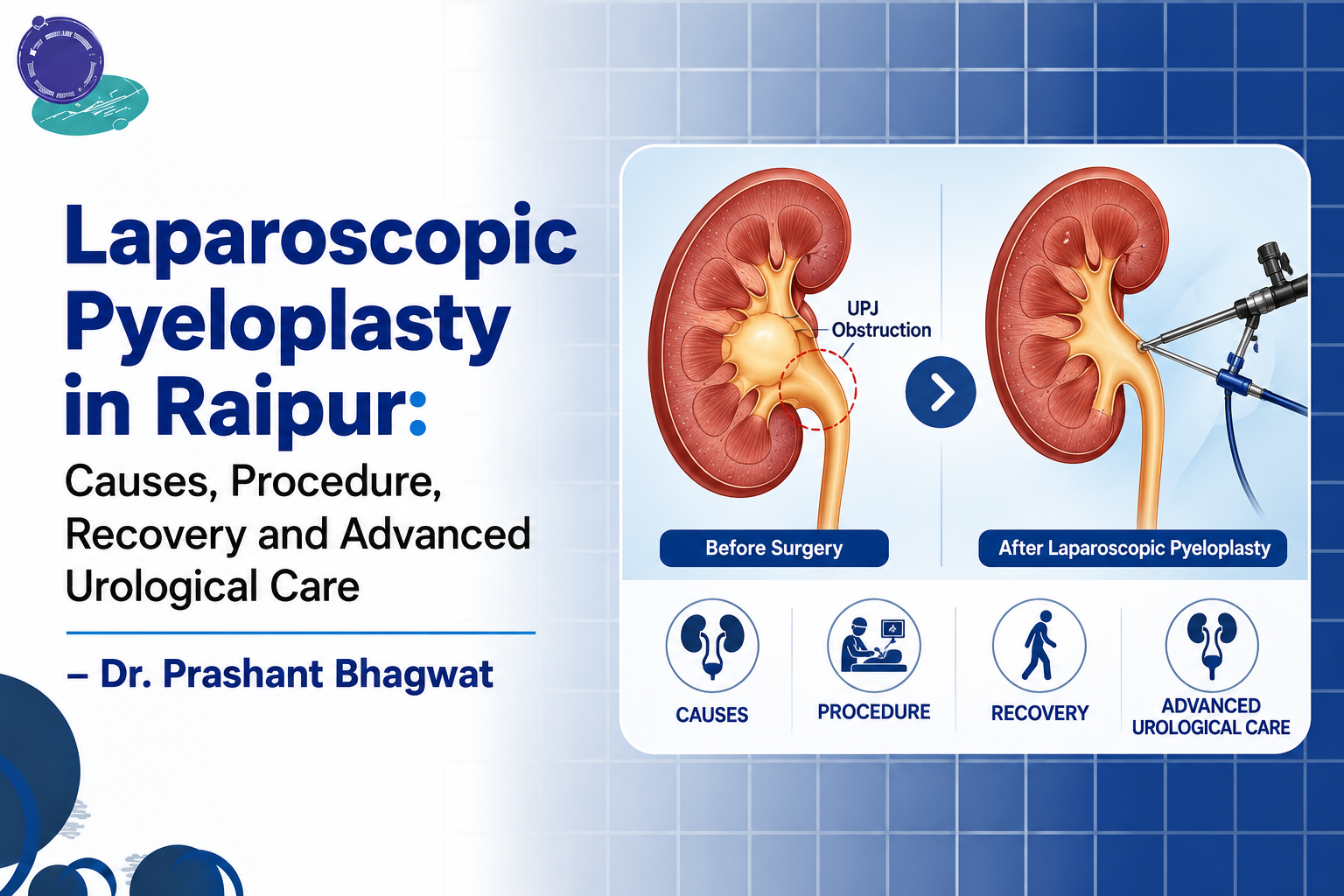
Laparoscopic Pyeloplasty in Raipur is a minimally invasive surgical procedure used to correct ureteropelvic junction (UPJ) obstruction, a condition that restricts the normal flow of urine from the kidney into the ureter. When urine cannot drain properly, it may accumulate inside the kidney, causing swelling, recurrent infections, flank pain and, in some cases, deterioration of kidney function. Early diagnosis and appropriate treatment can help protect the affected kidney and improve urinary drainage.
At Dr. M R Bhagwat Memorial Hospital, patients receive medical and surgical care supported by operation theatres, diagnostic facilities, patient monitoring systems and intensive care infrastructure. The hospital provides a multispecialty environment for evaluating urological conditions and planning appropriate surgical treatment.
Dr. Prashant Manohar Bhagwat is an experienced urologist who has been practicing in Raipur since 1999. He completed his MBBS and MS in General Surgery from Pt. J. N. M. Medical College, Raipur, followed by DNB in Urology under the guidance of Dr. C. Nageswara Rao. He further enhanced his clinical experience at K.E.M. Hospital, Pune, and earned the FRCS qualification from Glasgow, Scotland, United Kingdom. His special interests include endoscopic urological procedures, kidney stone management and laparoscopic urological surgery. People searching for Laparoscopic Pyeloplasty in Samta Colony, Raipur may want to understand when surgery is necessary, how the procedure works, and what recovery involves. This guide explains the condition, diagnostic process, available treatment approaches, surgical preparation, postoperative care and important questions patients should discuss with their urologist.
What Is Laparoscopic Pyeloplasty?
Laparoscopic pyeloplasty is a reconstructive surgical procedure performed to correct a narrowing or blockage at the ureteropelvic junction. This junction connects the renal pelvis, which collects urine inside the kidney, to the ureter, the tube that carries urine to the urinary bladder. When this connection becomes narrowed, urine may not drain efficiently. The resulting pressure can cause swelling of the kidney, known as hydronephrosis. Depending on the severity and duration of the obstruction, patients may experience pain, infections, kidney stones or impaired kidney function. During laparoscopic pyeloplasty, the surgeon uses a camera and specialised instruments inserted through small incisions. The narrowed segment is corrected, and the healthy portions of the urinary tract are reconstructed to improve urine drainage. The exact technique depends on the patient’s anatomy, the location and length of the obstruction, previous procedures and the surgeon’s assessment. A temporary ureteral stent may also be placed to support drainage while the reconstructed area heals.
Understanding Ureteropelvic Junction Obstruction
UPJ obstruction can be present from birth or develop later in life. In children, it is often associated with the development of the urinary tract. In adults, it may be related to scarring, previous surgery, kidney stones or blood vessels that cross and compress the junction.
The severity varies from person to person. Some individuals have mild narrowing that can be monitored, while others develop significant obstruction that affects kidney drainage.
For patients considering Laparoscopic Pyeloplasty in Choubey Colony, Raipur, understanding the underlying cause is an important first step. The urologist evaluates whether the narrowing is responsible for the symptoms and whether it is affecting kidney function.
Common Causes of UPJ Obstruction
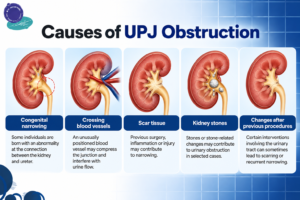
Congenital narrowing: Some individuals are born with an abnormality at the connection between the kidney and ureter.
Crossing blood vessels: An unusually positioned blood vessel may compress the junction and interfere with urine flow.
Scar tissue: Previous surgery, inflammation or injury may contribute to narrowing.
Kidney stones: Stones or stone-related changes may contribute to urinary obstruction in selected cases.
Changes after previous procedures: Certain interventions involving the urinary tract can sometimes lead to scarring or recurrent narrowing.
Identifying the likely cause helps the urologist select the most appropriate treatment.
Common Symptoms of UPJ Obstruction
UPJ obstruction does not always cause noticeable symptoms. Some cases are discovered during ultrasound examinations performed for unrelated reasons. When symptoms develop, their nature and severity can vary according to the degree of obstruction and the patient’s age. Possible symptoms include:
- Pain in the side or back near the kidney
- Recurrent flank discomfort
- Abdominal pain
- Nausea or vomiting associated with pain
- Repeated urinary tract infections
- Blood in the urine
- Kidney stones
- Fever when infection is present
- Abnormal kidney swelling on imaging
People searching for Laparoscopic Pyeloplasty in Shankar Nagar, Raipur may be experiencing recurring discomfort or may have received an ultrasound report showing hydronephrosis.
However, these symptoms do not automatically indicate UPJ obstruction. Kidney stones, urinary infections, musculoskeletal problems and other conditions can produce similar complaints. A urological assessment is necessary to determine the underlying cause.
When Should Symptoms Be Evaluated?
Medical evaluation is appropriate when flank pain keeps returning, urinary infections recur, blood appears in the urine or imaging shows unexplained kidney swelling.
Fever with suspected urinary obstruction requires urgent medical assessment because an infected, obstructed urinary system can become serious. Severe pain accompanied by vomiting, reduced urine output or significant weakness also warrants prompt attention.
Who May Need Laparoscopic Pyeloplasty?
Not every patient diagnosed with UPJ obstruction needs surgery immediately. The decision depends on symptoms, kidney function, the degree of obstruction, imaging findings and the risk of future complications.
A urologist may recommend reconstructive surgery when investigations show that the obstruction is clinically significant.
Patients With Persistent Pain
Repeated flank pain associated with impaired kidney drainage may indicate that the obstruction is affecting daily life and requires treatment.
Patients With Recurrent Infections
When obstruction contributes to repeated urinary infections, correcting the underlying drainage problem may be considered.
Patients With Declining Kidney Function
If functional testing shows deterioration in the affected kidney, the urologist may recommend intervention to address the obstruction.
Patients With Progressive Hydronephrosis
Increasing kidney swelling, especially when accompanied by impaired drainage or declining function, may influence the decision to operate.
For patients researching Laparoscopic Pyeloplasty in Civil Lines, Raipur, the important question is not simply whether narrowing is present, but whether it is affecting kidney health enough to justify surgery.
Who May Not Need Immediate Surgery?
Patients with mild obstruction, stable kidney function and no concerning symptoms may sometimes be monitored instead of undergoing immediate surgery.
Monitoring can involve regular consultations, ultrasound examinations and kidney function assessments. The interval between evaluations depends on the patient’s age, symptoms, test results and clinical circumstances.
The decision between observation and surgery should always be made with the treating urologist.
How Is UPJ Obstruction Diagnosed?
Before recommending surgery, the urologist must establish the location and severity of the obstruction and assess how well the kidneys are functioning.
Ultrasound Examination
Ultrasound can identify hydronephrosis and provide information about kidney structure. It is commonly used as an initial investigation because it does not involve ionising radiation.
CT Scan
A CT scan may provide detailed anatomical information about the kidneys, ureters and surrounding structures. It can also help identify kidney stones or other possible causes of obstruction.
Renal Functional Scan
A functional renal scan can help assess the contribution of each kidney to overall kidney function and evaluate how effectively urine drains from the affected kidney.
This information can be particularly important when deciding whether surgery is necessary.
Urine Testing
Urine analysis and culture may be recommended when infection, blood in the urine or other urinary abnormalities are suspected.
Blood Tests
Blood tests can help assess overall kidney function and identify medical concerns that may affect surgical planning.
Patients exploring Laparoscopic Pyeloplasty in Devendra Nagar, Raipur should bring previous imaging reports, urine test results, blood reports and medication details to their consultation whenever possible.
The results help the urologist understand whether the obstruction is significant and whether further testing is required.
Laparoscopic Pyeloplasty in Raipur: How the Procedure Is Performed
The surgical approach is planned according to the patient’s diagnosis, anatomy and overall health. The procedure generally involves the following stages.
1. Preoperative Preparation
The surgical team reviews medical history, medications, allergies, kidney function and imaging results. The patient receives instructions about fasting, medication adjustments and admission.
2. Anaesthesia
Laparoscopic pyeloplasty is generally performed under general anaesthesia. The anaesthesia team monitors vital signs throughout the procedure.
3. Small Incisions
The surgeon makes small incisions in the abdomen to introduce the laparoscope and specialised surgical instruments.
4. Identification of the Obstruction
Using the camera and surgical instruments, the surgeon identifies the ureteropelvic junction and the narrowed segment.
5. Reconstruction
The obstructed section is corrected, and the healthy portions of the renal pelvis and ureter are reconnected to create a better passage for urine.
6. Stent Placement
A temporary ureteral stent may be inserted to support urine drainage during healing.
7. Completion and Monitoring
The instruments are removed, the incisions are closed, and the patient is transferred to the recovery area for observation.
The duration of surgery and hospital stay can vary according to the patient’s condition and the complexity of the procedure.
For those considering Laparoscopic Pyeloplasty in Pachpedi Naka, Raipur, the surgeon should explain the planned technique, expected benefits, possible complications and alternatives before obtaining informed consent.
What Are the Benefits of Laparoscopic Pyeloplasty?
Laparoscopic pyeloplasty offers a minimally invasive alternative to conventional open reconstruction for appropriately selected patients.
Potential benefits include:
- Smaller surgical incisions
- Less tissue disruption
- Reduced postoperative discomfort in many patients
- Shorter hospital stay in suitable cases
- Earlier return to everyday activities
- Smaller visible scars
The main purpose, however, is to correct the obstruction and improve urine drainage—not simply to reduce the size of the incisions.
Outcomes vary according to the cause of obstruction, the patient’s anatomy, kidney function and surgical circumstances. No procedure can guarantee the same result for every patient. Laparoscopic Pyeloplasty in Telibandha, Raipur: Choosing the Right Treatment
Patients considering Laparoscopic Pyeloplasty in Telibandha, Raipur should understand that treatment depends on the severity of obstruction and its effect on the kidney.
Depending on the clinical findings, possible approaches may include:
- Observation with regular monitoring
- Management of associated infection
- Temporary drainage in selected situations
- Endoscopic treatment in appropriate cases
- Laparoscopic reconstructive surgery
- Open or other reconstructive approaches when indicated
These options are not interchangeable for every patient. For example, an endoscopic procedure may be suitable for certain narrowings, while a more extensive obstruction may require reconstructive surgery.
The urologist considers the length and location of the narrowed segment, the presence of crossing vessels, previous treatment and the patient’s kidney function when recommending a procedure.
About Dr. Prashant Manohar Bhagwat
Dr. Prashant Manohar Bhagwat is a urologist at Dr. M. R. Bhagwat Memorial Hospital in Raipur. He has been practicing in the city since 1999 and has a particular interest in endoscopic urological procedures, stone management and laparoscopic urological surgeries.
His educational background includes MBBS and MS in General Surgery from Pt. J. N. M. Medical College, Raipur, followed by DNB in Urology. He also received further clinical exposure at K.E.M. Hospital, Pune, and earned FRCS from Glasgow, Scotland, United Kingdom. Patients considering Laparoscopic Pyeloplasty in Samta Colony, Raipur may benefit from discussing their imaging reports, kidney function results and symptoms with a urologist experienced in evaluating urinary tract obstruction. A consultation should clarify the diagnosis, the reason surgery is being considered, the proposed technique and the follow-up plan.
Hospital Infrastructure and Surgical Support
Dr. M. R. Bhagwat Memorial Hospital provides multispecialty medical and surgical services in Raipur. The hospital information supplied for this page describes operation theatres, diagnostic systems, advanced monitoring and ICU facilities.
Advanced Patient Monitoring
Monitoring systems allow the healthcare team to observe vital parameters such as heart rate, blood pressure and oxygen saturation during appropriate stages of care.
Operation Theatre Support
A suitable surgical environment includes equipment, sterilisation practices, anaesthesia support and trained professionals who help maintain safety during procedures.
Intensive Care Facilities
The ICU supports patients who need closer observation or additional medical support. Whether a patient requires intensive care after pyeloplasty depends on their medical condition and surgical course.
Hospital infrastructure is one component of care; the patient’s diagnosis, surgical plan and postoperative follow-up remain equally important.
How Should Patients Prepare for Surgery?
Preparation helps the surgical team identify medical concerns and reduce avoidable complications. Patients should inform their doctor about:
- Previous abdominal or urological surgeries
- Existing medical conditions
- Current medicines and supplements
- Drug allergies
- Previous anaesthesia-related problems
- Recent fever or urinary infection
- Blood-thinning medicines
- Previous kidney stones or procedures
The doctor may recommend urine culture, blood tests, imaging or other investigations before surgery. Patients should follow the hospital’s fasting instructions and should not stop or change prescribed medicines without guidance from their healthcare team.

Recovery After Laparoscopic Pyeloplasty
Recovery varies according to the patient’s health, the complexity of the procedure and the postoperative course.
Following surgery, patients are monitored for pain, nausea, urinary symptoms and general recovery. The medical team provides instructions about wound care, medicines, activity and follow-up.
Movement and Daily Activities
Light movement may be encouraged when appropriate. Heavy lifting, strenuous exercise and certain activities may need to be restricted temporarily. Patients should follow their surgeon’s specific advice rather than relying on a general recovery timeline.
Wound Care
The incision sites should be cared for according to the discharge instructions. Increasing redness, swelling, discharge or worsening pain should be reported.
Diet and Hydration
Patients can gradually return to eating and drinking according to medical advice. Fluid intake should follow the clinician’s recommendations, particularly for those with other kidney or heart conditions.
Return to Work
The timing depends on the type of work, the patient’s recovery and the surgeon’s assessment. For patients considering Laparoscopic Pyeloplasty in Choubey Colony, Raipur, it is helpful to arrange assistance at home during the initial recovery period and keep follow-up appointments scheduled before discharge.
Understanding Ureteral Stents After Surgery
A ureteral stent is a thin, flexible tube that may be placed inside the urinary tract to help urine pass through the reconstructed area while it heals. Some patients experience temporary urinary frequency, urgency, discomfort during urination or blood-tinged urine while the stent is in place. These symptoms should be discussed with the treating team, particularly if they are severe or worsening.
The stent must be removed according to the urologist’s instructions. Patients should not assume it will come out on its own. People researching Laparoscopic Pyeloplasty in Shankar Nagar, Raipur should ask whether a stent is planned, how long it is expected to remain and what symptoms may occur while it is in place.
Possible Risks and Complications
Laparoscopic pyeloplasty is an established reconstructive procedure, but it has potential risks like other surgeries.
Possible complications include:
- Bleeding
- Infection
- Injury to nearby structures
- Urine leakage
- Stent-related discomfort
- Anaesthesia-related complications
- Persistent obstruction
- Recurrent narrowing caused by scar tissue
- Need for further treatment
- Conversion to open surgery in selected cases
The likelihood of complications varies according to the patient’s anatomy, previous procedures, medical history and the complexity of surgery. Patients should receive an individual explanation of risks before consenting to the procedure.
Why Is Follow-Up Important?
Surgery aims to improve urine drainage, but postoperative follow-up is necessary to assess the outcome. The urologist may recommend ultrasound or functional imaging to check whether kidney swelling has improved and whether urine is draining appropriately.
Follow-up may also include an assessment of symptoms, kidney function and any problems related to the stent. Patients should attend scheduled appointments even when pain has improved. Symptom relief alone does not always establish that drainage has returned to normal. For patients seeking Laparoscopic Pyeloplasty in Civil Lines, Raipur, follow-up planning should be discussed before surgery, including the timing of stent removal and any imaging required afterward.
Who Performs Laparoscopic Pyeloplasty?
Laparoscopic pyeloplasty is performed by a suitably trained urologist with experience in reconstructive urinary tract surgery. The procedure requires knowledge of urinary anatomy, laparoscopic techniques and the management of possible complications. The surgical team may include an anaesthesiologist, nurses, technicians and other healthcare professionals involved in perioperative care.
Before choosing a surgeon, patients should ask about the proposed procedure, the surgeon’s experience with the specific condition, the available alternatives and the arrangements for postoperative monitoring. Those researching Laparoscopic Pyeloplasty in Devendra Nagar, Raipur should also confirm how follow-up visits, stent removal and subsequent kidney function assessments will be coordinated.
Who Should Seek Urgent Medical Attention?
Certain symptoms may indicate an infection or significant urinary obstruction and should not wait for a routine appointment.
Seek urgent medical evaluation for:
- Fever with flank pain
- Severe or rapidly worsening abdominal or back pain
- Persistent vomiting
- Markedly reduced urine output
- Difficulty passing urine
- Significant blood in the urine, particularly with clots
- Severe weakness or confusion
A suspected urinary infection combined with obstruction can require urgent treatment. Patients should not attempt to manage these symptoms using leftover antibiotics or pain medicines without medical advice. For patients planning Laparoscopic Pyeloplasty in Pachpedi Naka, Raipur, the healthcare team should explain which postoperative symptoms can be expected and which require immediate attention.
Who May Benefit From Monitoring Instead of Surgery?
Some patients with UPJ obstruction may not need immediate reconstructive surgery. This may apply when the obstruction is mild, symptoms are absent or limited, and kidney function remains stable. Monitoring may involve repeated ultrasound examinations, clinical reviews and renal functional studies. The purpose is to identify changes that could make intervention necessary. Children with certain forms of UPJ obstruction may also be monitored because some cases improve as they grow. However, this depends on the severity of obstruction and the child’s kidney function. The decision to monitor rather than operate must be based on individual findings and regular specialist review. Patients should not discontinue follow-up simply because they have no pain.
Frequently Asked Questions About Laparoscopic Pyeloplasty
1. Can UPJ Obstruction Be Detected Before Birth?
Yes, prenatal ultrasound may identify kidney swelling that suggests UPJ obstruction. After birth, further evaluation helps determine whether monitoring or UPJ obstruction treatment in Raipur is needed.
2. Will the Kidney Return to Its Normal Size After Surgery?
Kidney swelling may improve after successful surgery, but the extent of recovery varies. Follow-up imaging and kidney function tests help assess the results of laparoscopic pyeloplasty surgery.
3. Can the Obstruction Return After Pyeloplasty?
Yes, recurrent narrowing can occur in some cases. Follow-up appointments and appropriate tests help identify persistent obstruction. A urologist experienced in pyeloplasty surgery in Raipur can evaluate ongoing symptoms.
4. Is Laparoscopic Pyeloplasty the Same as Robotic Pyeloplasty?
No. Both are minimally invasive procedures, but conventional laparoscopy uses instruments controlled directly by the surgeon, while robotic surgery uses a robotic system. The choice of laparoscopic pyeloplasty in Raipur or robotic surgery depends on the patient’s condition and the surgeon’s assessment.
5. How Long Does Recovery Take After Laparoscopic Pyeloplasty?
Recovery varies depending on the patient’s health, surgical approach, and healing progress. The treating team provides guidance on returning to daily activities and managing follow-up appointments. The expected laparoscopic pyeloplasty recovery time should be discussed with the surgeon.
6. Does Pyeloplasty Surgery Remove the Kidney?
No. Pyeloplasty is intended to correct the blockage between the kidney and ureter while preserving the kidney. UPJ obstruction surgery aims to improve urine drainage and help protect kidney function.
7. Can Kidney Stones and UPJ Obstruction Occur Together?
Yes, both conditions can occur in the same patient. The urologist evaluates the stone location, severity of obstruction, and kidney function before recommending kidney obstruction treatment in Raipur.
8. What Is the Success Rate of Pyeloplasty Surgery?
Many patients experience improved urine drainage after pyeloplasty, although outcomes vary with individual circumstances. Symptoms, imaging, and kidney function tests help assess the results. The expected pyeloplasty surgery success rate depends on the patient’s condition and clinical findings.
9. Should a Patient Get a Second Opinion Before Surgery?
A second opinion can help patients better understand their diagnosis, surgical recommendation, and alternatives. Consulting a kidney specialist in Raipur may help clarify the available treatment options.
10. Can UPJ Obstruction Affect Both Kidneys?
Yes, although many cases affect only one kidney. If both kidneys appear affected, the urologist evaluates each kidney separately and checks overall kidney function to determine the appropriate ureteropelvic junction obstruction treatment.
Conclusion – Laparoscopic Pyeloplasty in Raipur
Laparoscopic Pyeloplasty in Raipur is a minimally invasive surgical option for selected patients with ureteropelvic junction obstruction. The procedure aims to correct the narrowed connection between the kidney and ureter, improve urine drainage and help protect kidney function when significant obstruction is present.
The decision to operate should be based on symptoms, imaging, kidney function and the severity of obstruction. Some patients require surgery, while others may be suitable for monitoring. Dr. Prashant Manohar Bhagwat, an experienced urologist practicing in Raipur since 1999, has a special interest in endoscopic urological procedures, stone management and laparoscopic urological surgery. Dr. M. R. Bhagwat Memorial Hospital provides a multispecialty environment with diagnostic, surgical and monitoring facilities to support patient care.
Patients with recurring flank pain, repeated urinary infections or unexplained kidney swelling should seek a urological evaluation. A clear diagnosis, informed discussion, appropriate treatment planning and regular follow-up are essential parts of managing UPJ obstruction