
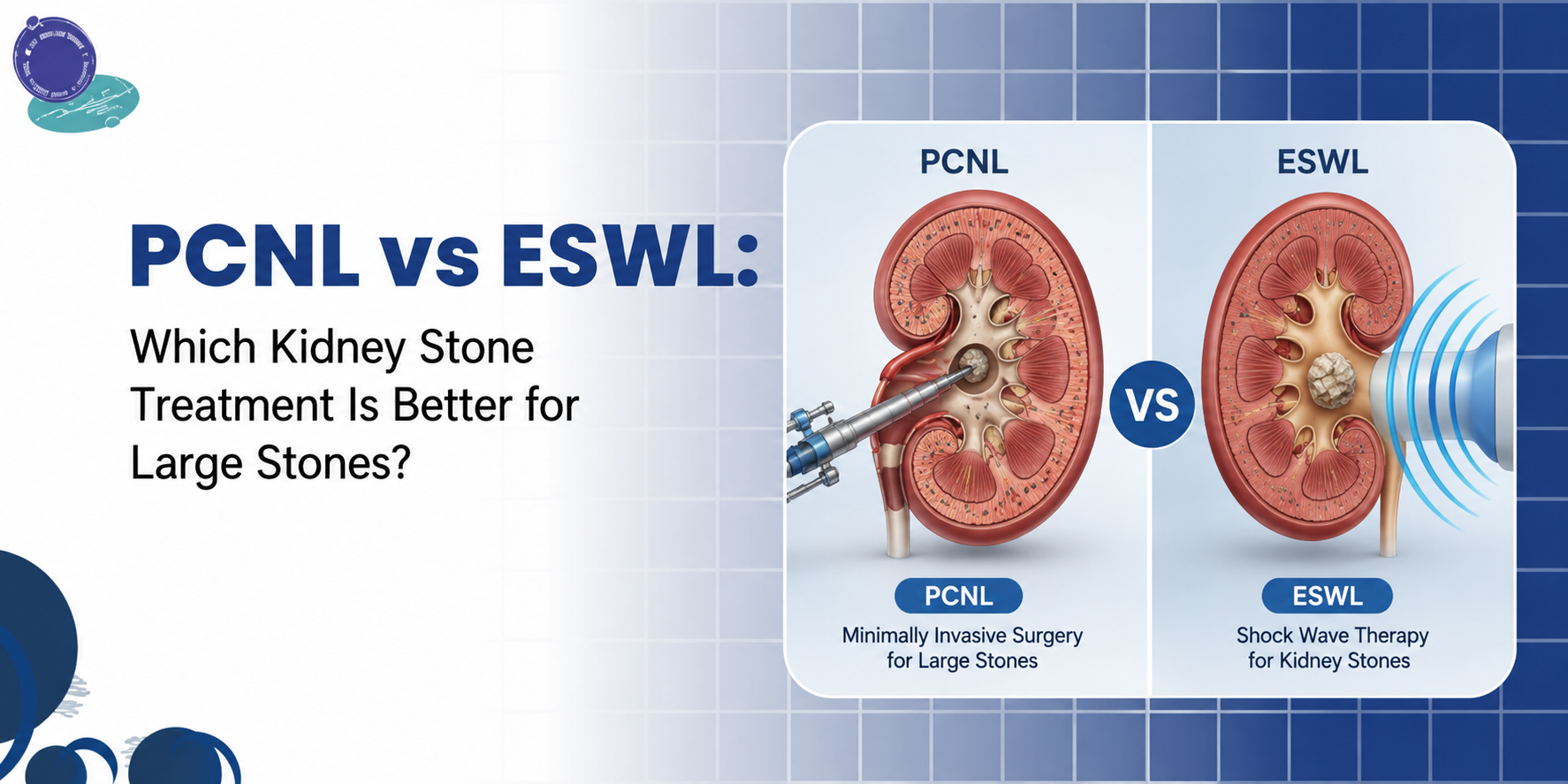
PCNL vs ESWL: Which Kidney Stone Treatment in Raipur Is Better for Large Stones?
Choosing between PCNL and ESWL depends on several factors, including the size, location, hardness, and number of kidney stones, as well as the patient’s overall health. A detailed evaluation by a urologist helps determine the most suitable Kidney Stone Treatment in Raipur.
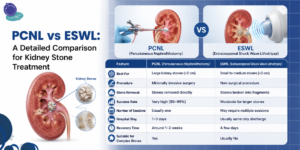
PCNL vs ESWL: A Detailed Comparison for Kidney Stone Treatment
| Feature | PCNL (Percutaneous Nephrolithotomy) | ESWL (Extracorporeal Shock Wave Lithotripsy) |
|---|---|---|
| Best For | Large kidney stones (>2 cm) | Small to medium stones (<2 cm) |
| Procedure | Minimally invasive surgery | Non-surgical procedure |
| Stone Removal | Stones removed directly | Stones broken into fragments |
| Success Rate | Very high (90–95%) | Moderate for larger stones |
| Number of Sessions | Usually one | May require multiple sessions |
| Hospital Stay | 1–3 days | Usually same-day discharge |
| Recovery Time | Around 1–2 weeks | A few days |
| Suitable for Complex Stones | Yes | Usually No |
For patients with large kidney stones, PCNL for Kidney Stones is generally considered the more effective and reliable treatment because it provides a higher stone-free rate and reduces the need for repeated procedures.
When Is PCNL Recommended for Kidney Stone Treatment in Raipur?
Urologists usually recommend PCNL in the following situations:
- Kidney stones larger than 2 cm
- Staghorn kidney stones
- Multiple kidney stones
- Hard stones that cannot be broken easily by ESWL
- Stones causing repeated infections
- Blockage of urine flow due to large stones
- Failure of previous ESWL treatment
For these conditions, PCNL offers the highest chance of complete stone removal in a single procedure.
When Is ESWL Recommended for Kidney Stones?
ESWL is generally suitable for:
- Small kidney stones
- Stones less than 2 cm
- Patients who prefer a non-surgical option
- Stones located in areas where fragments can pass easily
- Patients without urinary obstruction or severe infection
Although ESWL is less invasive, it may not be the ideal choice for large kidney stones, as incomplete stone fragmentation can leave residual fragments behind.
Recovery After PCNL and ESWL
Recovery After PCNL
Most patients stay in the hospital for 1–3 days after the procedure. Recovery depends on the stone size and overall health, but most individuals return to their routine activities within one to two weeks.
Doctors usually recommend:
- Drinking plenty of water
- Avoiding heavy lifting for a few weeks
- Taking prescribed medications
- Attending follow-up visits
- Undergoing imaging tests to confirm complete stone removal
Recovery After ESWL
Recovery after ESWL is usually quicker because there are no surgical incisions. Patients can often return home on the same day.
However, they may experience:
- Mild discomfort while passing stone fragments
- Blood in urine for a short period
- Frequent urination
- Need for repeat imaging to ensure all fragments have passed
Some patients may require additional ESWL sessions if larger fragments remain.
Are There Any Risks Associated with PCNL and ESWL?
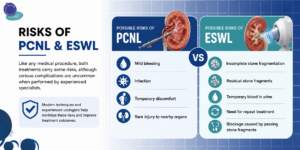
Like any medical procedure, both treatments carry some risks, although serious complications are uncommon when performed by experienced specialists.
Possible Risks of PCNL
- Mild bleeding
- Infection
- Temporary discomfort
- Rare injury to nearby organs
Possible Risks of ESWL
- Incomplete stone fragmentation
- Residual stone fragments
- Temporary blood in urine
- Need for repeat treatment
- Blockage caused by passing stone fragments
Modern techniques and experienced urologists help minimize these risks and improve treatment outcomes.
Why Choose Dr. M. R. Bhagwat Memorial Hospital for Kidney Stone Treatment in Raipur?
Choosing the right hospital is just as important as choosing the right procedure. At Dr. M. R. Bhagwat Memorial Hospital, patients receive comprehensive Kidney Stone Treatment in Raipur using advanced technology, experienced specialists, and patient-centered care.
The hospital offers:
- Experienced urologists for complex kidney stone cases
- Advanced diagnostic imaging for accurate stone evaluation
- Modern operation theatres and ICU facilities
- Minimally invasive kidney stone procedures
- Personalized treatment planning
- Comprehensive pre-operative and post-operative care
- Safe, effective, and evidence-based treatment protocols
Whether you require PCNL, ESWL, or another minimally invasive procedure, the medical team focuses on complete stone removal, faster recovery, and long-term kidney health.
How to Prevent Kidney Stones After Treatment
Even after successful Kidney Stone Treatment in Raipur, preventing recurrence is essential because kidney stones can return if lifestyle changes are not followed.
Tips to Reduce the Risk of Kidney Stones
- Drink 2.5–3 liters of water daily.
- Reduce excess salt intake.
- Limit foods high in oxalates if advised.
- Eat a balanced diet rich in fruits and vegetables.
- Maintain a healthy body weight.
- Avoid excessive sugary drinks and processed foods.
- Take medications only as prescribed.
- Get regular follow-up check-ups if you have a history of kidney stones.
Simple lifestyle modifications can significantly lower the chances of developing stones again.
Frequently Asked Questions (FAQs) About PCNL vs ESWL
1. Which is better for large kidney stones—PCNL or ESWL?
For kidney stones larger than 2 cm, PCNL for Kidney Stones is generally considered the most effective treatment because it offers a higher stone-free rate and usually removes the stone in a single procedure.
2. Is PCNL a major surgery?
No. PCNL is a minimally invasive kidney stone surgery performed through a small incision in the back. Compared with traditional open surgery, it causes less pain, smaller scars, and faster recovery.
3. Is ESWL painful?
Most patients tolerate ESWL well. Mild discomfort may occur during or after the procedure while stone fragments pass through the urinary tract.
4. How long does recovery take after PCNL?
Most patients stay in the hospital for 1–3 days and resume normal daily activities within 1–2 weeks, depending on the size of the stone and their overall health.
5. Can kidney stones return after treatment?
Yes. Kidney stones can recur if preventive measures are not followed. Staying hydrated, maintaining a healthy diet, and attending regular follow-ups help reduce the risk of recurrence.
Conclusion: Choosing the Right Kidney Stone Treatment in Raipur
When comparing PCNL vs ESWL, the best treatment depends on the size, location, and complexity of the kidney stone. While ESWL is an excellent option for selected small kidney stones, PCNL for Kidney Stones remains the preferred treatment for large kidney stones because of its high success rate and complete stone removal.
If you are experiencing symptoms such as severe back pain, blood in the urine, recurrent urinary infections, or have been diagnosed with a large kidney stone, early consultation is important. At Dr. M. R. Bhagwat Memorial Hospital, patients receive advanced Kidney Stone Treatment in Raipur with modern technology, experienced specialists, and personalized care to achieve the best possible outcomes.