
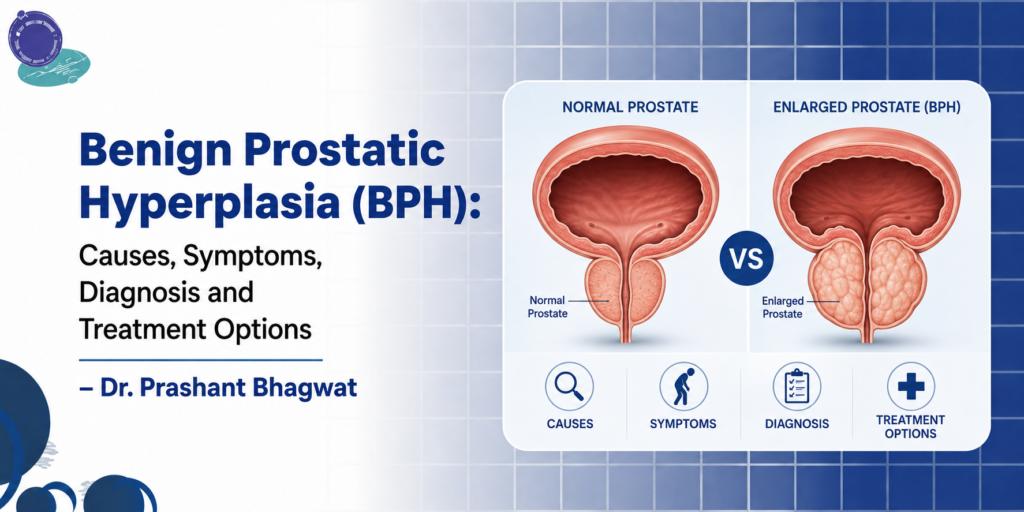
Benign Prostatic Hyperplasia (BPH): Causes, Symptoms, Diagnosis and Treatment Options – Dr. Prashant Bhagwat
BPH Treatment in Raipur is important for men who experience urinary problems such as frequent urination, weak urine flow, difficulty starting urination, or incomplete bladder emptying. Benign Prostatic Hyperplasia (BPH) is a common condition in which the prostate gland becomes enlarged, particularly with increasing age. Although BPH is not prostate cancer, an enlarged prostate can put pressure on the urethra and interfere with normal urine flow. Early evaluation can help identify the severity of prostate enlargement and determine whether lifestyle changes, medicines, minimally invasive procedures, or surgery may be appropriate. Dr. Prashant Bhagwat, an experienced urology specialist at Dr. M. R. Bhagwat Memorial Hospital, Raipur, provides evaluation and treatment for urinary and prostate-related conditions with a patient-focused approach. Best Urologist in Raipur – Dr. Prashant Bhagwat Best Urologist in Raipur Dr. Prashant Bhagwat provides comprehensive urological care with a focus on accurate diagnosis, appropriate treatment, and patient comfort. At Dr. M. R. Bhagwat Memorial Hospital, patients can receive urological evaluation supported by modern diagnostic facilities and advanced healthcare infrastructure. The hospital provides comprehensive medical and surgical services, supported by experienced doctors, trained staff, advanced patient monitoring systems, ICU facilities, operation theatres, and 24/7 emergency care. For men experiencing urinary difficulties, prostate enlargement, recurrent urinary problems, or other urological concerns, a timely consultation with Dr. Prashant Bhagwat can help identify the underlying condition and guide suitable management. What is Benign Prostatic Hyperplasia (BPH)? Benign Prostatic Hyperplasia in Raipur refers to non-cancerous enlargement of the prostate gland. The prostate is located below the bladder and surrounds part of the urethra, the tube through which urine passes from the bladder. As the prostate becomes enlarged, it can narrow the urethra and affect the normal flow of urine. This may result in urinary symptoms that gradually become more noticeable. BPH may cause: Difficulty starting urination Weak or slow urine stream Frequent urination Urgency to urinate Waking several times at night to urinate Dribbling after urination Feeling that the bladder has not completely emptied Intermittent urine flow BPH is different from prostate cancer, but persistent urinary symptoms should still be evaluated by a qualified urologist. What Causes BPH? BPH Causes and Risk Factors are primarily associated with ageing and changes in male hormones. The exact reason why some men develop significant prostate enlargement while others do not is not completely understood. Factors associated with BPH may include: Increasing age Changes in hormone levels Family history of prostate problems Obesity Diabetes Cardiovascular health conditions Lack of physical activity Age-related changes in prostate tissue Not every man with an enlarged prostate experiences significant symptoms. The severity of symptoms depends on how much the prostate affects the urinary tract. Common Symptoms of BPH BPH Symptoms in Men may develop gradually and can initially appear mild. However, symptoms may become more noticeable as prostate enlargement progresses. Storage Symptoms These symptoms occur when the bladder stores urine: Frequent urination Sudden urge to urinate Increased nighttime urination Difficulty delaying urination Voiding Symptoms These occur when urine is being passed: Difficulty starting urination Weak urine stream Interrupted urine flow Straining to urinate Prolonged urination Post-Urination Symptoms Some men may experience: Dribbling after urination Feeling of incomplete bladder emptying Persistent symptoms should not be ignored because untreated urinary obstruction can sometimes lead to complications. Who Is More Likely to Develop BPH? Prostate Enlargement Risk Factors become more relevant as men get older. BPH is particularly common in middle-aged and older men. Risk may be associated with: Increasing age Family history of BPH Obesity Diabetes Sedentary lifestyle Cardiovascular conditions Hormonal changes Previous urinary problems Having these risk factors does not mean that a person will definitely develop BPH. Regular medical evaluation can help identify prostate-related problems early. How is BPH Diagnosed? BPH Diagnosis in Raipur begins with a detailed medical and urological assessment. The doctor may ask about urinary symptoms, their duration, severity, medication use, medical history, and lifestyle. Depending on the individual’s symptoms, evaluation may include: Medical history Physical examination Digital rectal examination when appropriate Urine examination Blood tests Prostate-specific antigen (PSA) testing when indicated Ultrasound examination Measurement of post-void residual urine Uroflowmetry Additional urological investigations when required The purpose of diagnosis is not only to confirm prostate enlargement but also to rule out other causes of urinary symptoms. BPH Treatment Options Prostate Enlargement Treatment in Raipur depends on the severity of symptoms, prostate size, urinary obstruction, overall health, and possible complications. After evaluation, treatment may include: Lifestyle modifications Regular monitoring Medicines Minimally invasive procedures Endoscopic treatment Surgical treatment when required Not every patient with BPH requires surgery. Men with mild symptoms may sometimes be managed through observation, lifestyle measures, and appropriate medical treatment. Lifestyle Changes for BPH BPH Management in Raipur may include simple lifestyle modifications, particularly for men with mild urinary symptoms. Helpful measures may include: Limiting fluids before bedtime Reducing excessive caffeine intake Avoiding or limiting alcohol Maintaining a healthy body weight Staying physically active Avoiding unnecessary delay in urination Reviewing medicines that may worsen urinary symptoms with a doctor Following a regular bathroom schedule when appropriate Lifestyle measures may improve symptoms but should not replace medical evaluation when urinary difficulties are persistent or worsening. Medicines for BPH BPH Medication Treatment may be recommended when urinary symptoms affect a person’s quality of life. Depending on the patient’s condition, doctors may use medicines that help relax the prostate and bladder outlet or medicines that can gradually reduce prostate size. Treatment should be selected according to individual symptoms, prostate characteristics, other medical conditions, and possible medication interactions. Patients should not start, stop, or change prostate medicines without medical guidance. When is BPH Surgery Required? BPH Surgery in Raipur may be considered when symptoms are severe, medicines are not providing adequate relief, or complications develop. Surgical or procedural treatment may be considered in situations such as: Significant urinary obstruction Repeated urinary retention Recurrent urinary tract infections Bladder stones associated with obstruction Significant bleeding related to BPH Kidney or bladder complications Persistent symptoms despite appropriate medication The appropriate procedure depends on prostate size,