
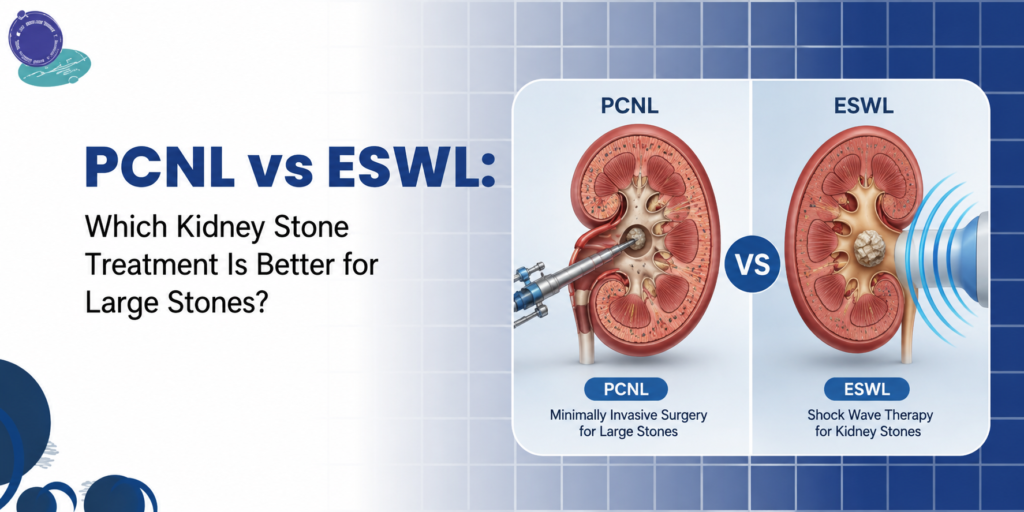
PCNL vs ESWL: Which Kidney Stone Treatment Is Better for Large Stones?
Kidney stones are one of the most common urological conditions, causing severe pain, difficulty in urination, and sometimes serious complications if left untreated. While small kidney stones often pass naturally or with medication, large kidney stones usually require advanced medical procedures for complete removal. Two of the most commonly recommended treatments are PCNL (Percutaneous Nephrolithotomy) and ESWL (Extracorporeal Shock Wave Lithotripsy). Understanding the difference between these procedures helps patients make informed treatment decisions. At Dr. M. R. Bhagwat Memorial Hospital, Raipur, experienced urologists use advanced diagnostic technology and minimally invasive procedures to provide safe and effective Kidney Stone Treatment in Raipur. The hospital is equipped with modern operation theatres, ICU support, and advanced imaging facilities, ensuring comprehensive care for patients with simple and complex kidney stones. What Are Kidney Stones? Kidney stones are hard deposits made of minerals and salts that develop inside the kidneys. They vary in size, from tiny crystals to stones larger than 2 cm. When these stones move through the urinary tract, they can cause intense pain and urinary obstruction. Large kidney stones usually cannot pass naturally and often require specialized Kidney Stone Treatment in Raipur to prevent kidney damage and infection. Common Symptoms That May Indicate Large Kidney Stones If you experience any of the following symptoms, you should consult a specialist for Kidney Stone Treatment in Raipur: Severe pain in the back or side Pain radiating toward the lower abdomen or groin Blood in urine (Hematuria) Burning sensation while urinating Frequent urge to urinate Difficulty passing urine Nausea and vomiting Fever and chills (if infection develops) Cloudy or foul-smelling urine Ignoring these symptoms can increase the risk of kidney infection, urinary blockage, and permanent kidney damage. What Is PCNL (Percutaneous Nephrolithotomy)? PCNL (Percutaneous Nephrolithotomy) is a minimally invasive surgical procedure specifically designed to remove large kidney stones, usually those larger than 2 cm. During the procedure: A small incision is made in the patient’s back. A thin tube is inserted directly into the kidney. A miniature camera helps the surgeon locate the stone. Specialized instruments break and remove the stone fragments completely. Because the stone is removed directly, PCNL for Kidney Stones offers a very high success rate, especially for large or complex stones. Advantages of PCNL for Large Kidney Stones PCNL has become the preferred option for treating large kidney stones because of several important benefits. Higher Stone Clearance Rate Most patients become stone-free after a single procedure. Best for Large Stones It is considered the gold-standard treatment for kidney stones larger than 2 cm. Suitable for Complex Stones PCNL effectively removes staghorn stones and multiple large stones. Lower Risk of Repeat Procedures Since the stones are removed directly, fewer additional treatments are usually required. Faster Recovery with Modern Techniques With advanced minimally invasive techniques available at Dr. M. R. Bhagwat Memorial Hospital, most patients recover faster than with traditional open surgery. What Is ESWL (Extracorporeal Shock Wave Lithotripsy)? ESWL (Extracorporeal Shock Wave Lithotripsy) is a completely non-surgical procedure that uses high-energy shock waves to break kidney stones into smaller pieces. These fragments are then expected to pass naturally through the urinary tract over the following days or weeks. ESWL is commonly recommended for small to medium-sized kidney stones, especially those measuring less than 2 cm, provided they are located in a favorable position within the kidney. However, for large kidney stones, ESWL may not always provide complete stone clearance and patients may require multiple treatment sessions or additional procedures. I prefer this response PCNL vs ESWL: Which Kidney Stone Treatment in Raipur Is Better for Large Stones? Choosing between PCNL and ESWL depends on several factors, including the size, location, hardness, and number of kidney stones, as well as the patient’s overall health. A detailed evaluation by a urologist helps determine the most suitable Kidney Stone Treatment in Raipur. PCNL vs ESWL: A Detailed Comparison for Kidney Stone Treatment Feature PCNL (Percutaneous Nephrolithotomy) ESWL (Extracorporeal Shock Wave Lithotripsy) Best For Large kidney stones (>2 cm) Small to medium stones (<2 cm) Procedure Minimally invasive surgery Non-surgical procedure Stone Removal Stones removed directly Stones broken into fragments Success Rate Very high (90–95%) Moderate for larger stones Number of Sessions Usually one May require multiple sessions Hospital Stay 1–3 days Usually same-day discharge Recovery Time Around 1–2 weeks A few days Suitable for Complex Stones Yes Usually No For patients with large kidney stones, PCNL for Kidney Stones is generally considered the more effective and reliable treatment because it provides a higher stone-free rate and reduces the need for repeated procedures. When Is PCNL Recommended for Kidney Stone Treatment in Raipur? Urologists usually recommend PCNL in the following situations: Kidney stones larger than 2 cm Staghorn kidney stones Multiple kidney stones Hard stones that cannot be broken easily by ESWL Stones causing repeated infections Blockage of urine flow due to large stones Failure of previous ESWL treatment For these conditions, PCNL offers the highest chance of complete stone removal in a single procedure. When Is ESWL Recommended for Kidney Stones? ESWL is generally suitable for: Small kidney stones Stones less than 2 cm Patients who prefer a non-surgical option Stones located in areas where fragments can pass easily Patients without urinary obstruction or severe infection Although ESWL is less invasive, it may not be the ideal choice for large kidney stones, as incomplete stone fragmentation can leave residual fragments behind. Recovery After PCNL and ESWL Recovery After PCNL Most patients stay in the hospital for 1–3 days after the procedure. Recovery depends on the stone size and overall health, but most individuals return to their routine activities within one to two weeks. Doctors usually recommend: Drinking plenty of water Avoiding heavy lifting for a few weeks Taking prescribed medications Attending follow-up visits Undergoing imaging tests to confirm complete stone removal Recovery After ESWL Recovery after ESWL is usually quicker because there are no surgical incisions. Patients can often return home on the same day. However, they may experience: Mild discomfort while passing stone